When I first read the title for this class, my thoughts were pretty concrete. My belief was that teaching writing was all about teaching students or people how to write proper standardized English in correct, coherent sentences. Not once did I think it pertained to anything else. After discussing this topic in class and with our peers, it’s clear to me that there are so many other ideas that go into teaching writing and the processes that follow.
Evaluating the Writing Processes
When one sits down to write, what is the first step? For some it might be to outline their ideas so that when they sit down to write their essay, they know exactly what they’re going to say. And others? Some people may jump right into writing their, eventual, final essay, without ever sketching out their thoughts or ideas. Personally, I have always found my process to vary. There are times where I find an essay to have significant importance and decide to outline my thoughts. Usually, it is for History courses that I have to put together an outline of the events that happened for whatever topic I’m writing about. With outlines come mistakes, and when you make mistakes, your writing is authentic, and this is how you know authentic writing exists because it’s not going to be perfect from start to finish. It’s not all going to magically come together where the product scores perfect. It’s a process.
In Continuing the Journey by Ken Lindblom and Leila Christenbury, there is a specific method used to describe the authentic writing process Mr. Lindblom uses with his students. The book states, “Ken uses the POWER-P acronym to describe the authentic writing processes he engages his students in” (Lindblom 20). Prewriting, Organizing, Writing, Evaluating, Revising and Publishing form the acronym that Mr. Lindblom uses with his students. This is incredibly helpful to writers who aren’t sure where or how to start when writing a paper or essay that they find to be potentially overwhelming. But, there are many other processes that students can use to formulate their writing. On the next page, there’s a sentence that says, “We must caution again that a writing processes approach is not a lockstep recipe for writing or writing instruction” (Lindblom 21). A process that may work for one student may not work for five other students, so it’s important to play around with ones that are of potential use to you, the writer.
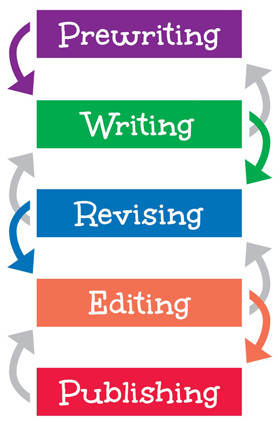
“LifeRich Publishing” has a helpful article for people seeking a process for their writing. In the article The 5-Step Writing Process: From Brainstorming to Publishing, the piece details some of the same steps Mr. Lindblom used with his students. Prewriting, Writing, Revision, Editing and Publishing are mentioned in the article by “LifeRich Publishing”, and I suggest many check it out.
Inauthentic to Authentic Writing
A lot of schools ask for a prompt and believe there is one specific road map in following to get you to the finish line. That’s not true. Inauthentic writing is something schools, specifically those of middle school and high school, need to break away from. Continuing the Journey also goes ahead and states, “when we move away from it [authentic writing] to the inauthentic kinds of recipe writing instruction we often give students–write an outline and then follow it; choose your topic sentence and then structure everything around it–we deny the reality of what any student or adult writer knows about how actual writing processes work” (Lindblom 17). Lindblom and Christenbury are correct. Embracing a messy process prepares students to write more effectively and doesn’t make them sound robotic.
 Writers Uncensored